

← Back to Blog

Complete Guide to Reading Supplement Labels: What Indian Consumers Must Know
Learn to decode supplement facts panels, understand serving sizes, identify fillers, and spot quality markers. Complete guide for smart supplement shopping in India.
Key Takeaways
- Supplement facts panels in India must display protein per serving, FSSAI license, and manufacturing details
- Look for third-party testing certifications and avoid products with excessive fillers or artificial additives
- Serving sizes can be misleading - always calculate cost per gram of actual protein or active ingredient
- Quality markers include proper amino acid profiles, digestibility scores, and transparent ingredient sourcing
- Red flags include missing FSSAI numbers, unrealistic claims, and suspiciously low prices from unauthorized sellers
- Always buy from authorized retailers with valid licenses to ensure product authenticity and safety
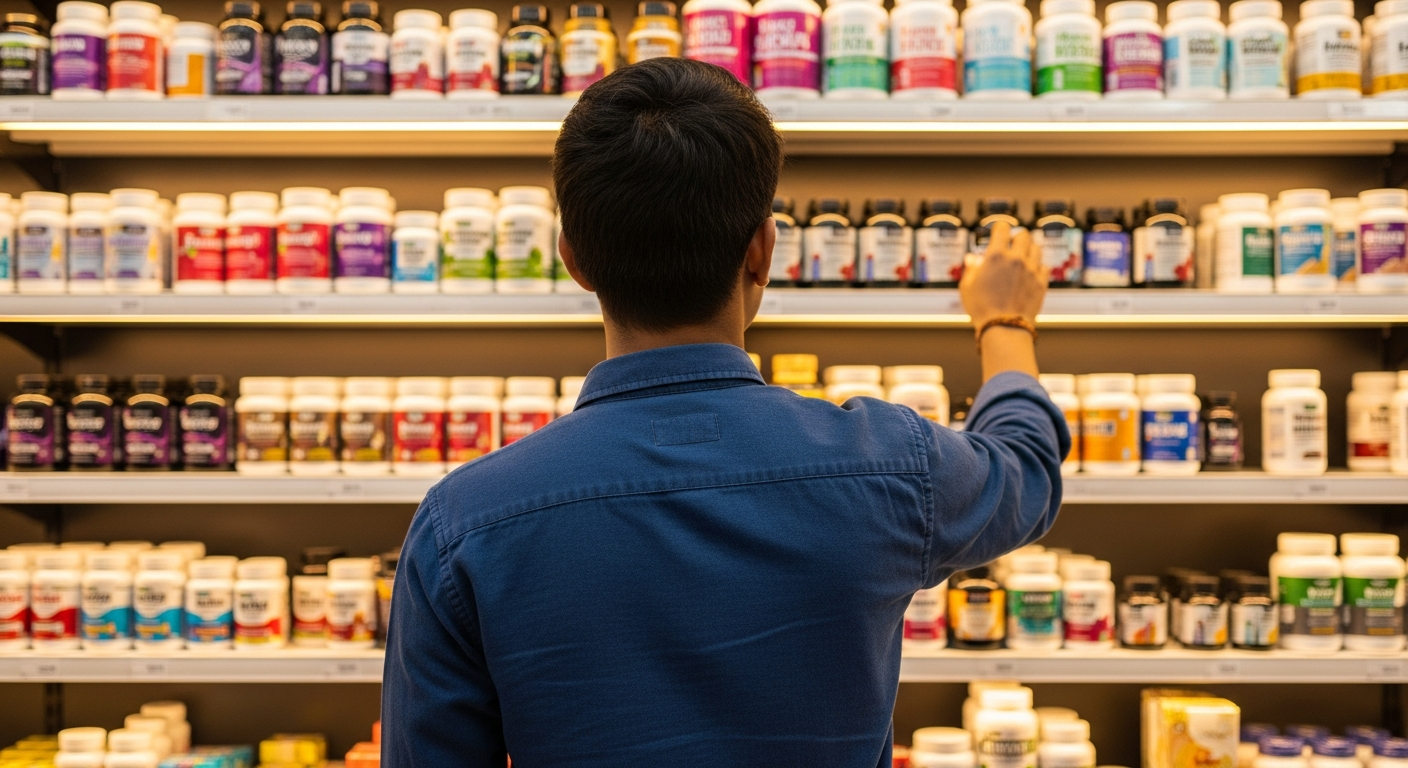
Walking down the supplement aisle can feel overwhelming. Rows of colorful containers, each promising different benefits, with labels packed with numbers, percentages, and scientific terms. Here's the thing - knowing how to read these labels isn't just helpful, it's essential for your safety and your wallet.
In India's rapidly growing supplement market, you'll find everything from ₹500 protein powders to ₹8,000 premium formulas. The price difference isn't always about quality, and the loudest marketing claims aren't always true. Let's decode what really matters on those labels.
Understanding the Supplement Facts Panel
The supplement facts panel is your roadmap to what's actually inside that container. In India, FSSAI regulations require specific information to be displayed, but brands often present it in ways that can confuse consumers.
Serving Size Reality Check
This is where many brands play games with your expectations. A serving size isn't standardized - one brand might use 30g scoops while another uses 25g or even 20g scoops for the same type of product.
Why does this matter? Let's say Brand A shows 24g protein per serving (30g scoop) while Brand B shows 22g protein per serving (25g scoop). Brand A looks better, right? But when you calculate per gram, Brand B actually delivers more protein per gram (0.88g vs 0.8g).
Pro Tip: Always calculate the cost per gram of protein or active ingredient. Divide the total price by the total protein content (not servings) to find the real value.
Ingredient Order Matters
Ingredients must be listed in descending order by weight. If you're buying a whey protein and the first ingredient is maltodextrin or artificial flavoring, you're paying protein prices for filler.
The first 3-5 ingredients typically make up 80% of the product. Everything after that is usually present in small amounts - which isn't necessarily bad for vitamins or enzymes, but concerning if protein isolate is listed as the 6th ingredient in your protein powder.
Decoding Quality Markers in Indian Supplements
Not all quality indicators are created equal. Some are marketing fluff, others are genuine signs of a well-made product.
Certifications That Actually Matter
| Certification | What It Means | Importance |
|---|---|---|
| FSSAI License | Food safety compliance in India | Essential - legally required |
| Third-party Lab Testing | Independent verification of ingredients | Very High |
| GMP Certified | Good Manufacturing Practices | High |
| ISO Certification | International quality standards | Moderate |
| Informed Choice/NSF | Tested for banned substances | High for athletes |
The ON Gold Standard Whey remains popular partly because Optimum Nutrition maintains consistent third-party testing and transparent labeling practices across all their products.
Protein Quality Indicators
For protein supplements, look beyond just the protein content. The amino acid profile tells the real story. Complete proteins should show all nine essential amino acids, with leucine content around 2.5-3g per serving for optimal muscle protein synthesis.
PDCAAS (Protein Digestibility Corrected Amino Acid Score) or the newer DIAAS score indicate how well your body can actually use the protein. Whey typically scores highest, followed by casein, then plant proteins. That's why whey isolate commands premium prices.
Spotting Red Flags and Fillers
Some ingredients serve legitimate purposes, others are just cheap bulk. Learning the difference can save you money and improve your results.
Common Fillers to Watch
Maltodextrin isn't evil - it's useful in mass gainers for quick carbs. But in a whey isolate that claims "zero carbs," finding maltodextrin as the second ingredient is a red flag.
Silicon dioxide and magnesium stearate are processing aids that prevent clumping. Small amounts are normal. But if your supplement feels gritty or doesn't mix well, there might be excessive amounts of these.
Artificial flavoring systems can make up 15-20% of some flavored supplements. That's why unflavored versions often deliver more protein per rupee - you're paying for protein, not strawberry essence.
Pro Tip: Compare the unflavored version's protein content to flavored ones from the same brand. The difference tells you how much space flavoring takes up.
Amino Spiking Detection
This is where some brands get sneaky. They add cheap amino acids like glycine or taurine to boost the total protein content on paper, but these don't contribute to muscle building like complete proteins do.
Look for the amino acid breakdown. If glycine, taurine, or creatine appear in large amounts (over 1g each), and the leucine content is suspiciously low (under 2g per 25g protein), you might be looking at amino spiking.
Understanding Indian Supplement Regulations
FSSAI regulations have tightened significantly in recent years, but enforcement varies. Here's what legitimate products must include:
Mandatory Label Information
Every supplement sold in India must display the FSSAI license number, manufacturing date, best before date, and the manufacturer's complete address. Missing any of these is a major red flag.
Nutritional information must be "per 100g" and "per serving." Claims like "High Protein" have specific legal definitions - a product can only claim high protein if it contains at least 20% protein by weight.
At NutraCore, we only stock products from authorized distributors with valid FSSAI documentation. This ensures you're getting authentic products that meet Indian safety standards.
Import vs Domestic Manufacturing
Many premium brands manufacture overseas and import to India. This isn't necessarily better or worse than domestic manufacturing, but imported products should show import licenses and may have different formulations to meet Indian regulations.
The MB Biozyme Performance Whey is manufactured in India using imported raw materials - a strategy many brands use to balance quality control with cost efficiency.
Price vs Value Analysis
Understanding what drives supplement pricing helps you make smarter buying decisions.
Cost Factors Breakdown
Raw material quality accounts for 40-60% of costs in quality supplements. Premium whey isolate costs significantly more than concentrate, which costs more than basic milk proteins.
Processing methods matter too. Cold-filtered whey retains more bioactive compounds than heat-processed versions, but costs more to produce. Hydrolyzed proteins undergo additional processing for faster absorption, adding to costs.
Third-party testing, quality certifications, and research backing can add ₹500-1500 to a product's retail price. You're paying for verification and peace of mind.
Marketing and brand building can add substantial costs. That's why direct-to-consumer brands sometimes offer similar quality at lower prices - they're cutting out middleman markups and reducing advertising spend.
Smart Shopping Strategies
Now let's talk about putting this knowledge into practice when you're actually shopping for supplements.
The NutraCore Approach to Product Selection
When we evaluate products for our Gopanpally and Gachibowli stores, we look beyond marketing claims. Our team checks manufacturing dates, verifies FSSAI documentation, and evaluates the cost-per-serving of active ingredients.
For creatine supplements, we prioritize products that use Creapure (German-made creatine monohydrate) because it's been extensively tested and has consistent particle size for better mixing.
We also consider customer feedback from our 10,000+ app users. Real-world results often differ from laboratory specifications, and customer reviews highlight issues like mixability, taste, and digestive comfort that labels don't reveal.
Building Your Supplement Stack
Start with basics before moving to specialized products. A quality whey protein, creatine monohydrate, and good multivitamin will serve most people better than exotic pre-workout blends.
Consider your actual needs versus wants. If you're getting adequate protein from dal, chicken, and paneer in your regular diet, you might need less supplemental protein than someone following a purely vegetarian diet with limited protein sources.
Common Label Reading Mistakes
Even informed consumers make these errors when evaluating supplements.
The Proprietary Blend Trap
"Proprietary blends" sound scientific, but they're often used to hide inadequate dosing. When you see "Muscle Building Blend 5000mg" without individual ingredient amounts, you don't know if you're getting effective doses.
For example, a pre-workout might list "5000mg Energy Blend" containing caffeine, beta-alanine, and citrulline. But if caffeine makes up 4500mg of that blend, you're getting minimal amounts of the other ingredients.
Percentage Daily Values Confusion
%DV (Percentage Daily Value) numbers are based on general population needs, not active individuals. A multivitamin showing 100% DV for B vitamins might be inadequate for someone training intensively.
Conversely, 2000% DV for vitamin B12 isn't dangerous (it's water-soluble), but it might indicate the manufacturer is using cheap vitamins in massive doses instead of more bioavailable forms in appropriate amounts.
Frequently Asked Questions
How do I verify if a supplement is genuine?
Check the FSSAI license number on the product label against the FSSAI website database. Genuine products will have batch codes, manufacturing dates, and proper packaging. Buy only from authorized retailers who can provide purchase invoices and guarantee authenticity.
What's the difference between concentrate and isolate proteins?
Whey concentrate contains 70-80% protein with some lactose and fat. Whey isolate is processed further to remove most lactose and fat, resulting in 90%+ protein content. Isolate digests faster and suits lactose-sensitive individuals better, but costs more per kilogram.
Should I choose imported or Indian-made supplements?
Both can be excellent if made by reputable manufacturers. Indian brands like MuscleBlaze often use imported raw materials with local manufacturing for cost efficiency. Focus on certifications, testing standards, and ingredient transparency rather than manufacturing location.
How do I calculate the real cost per serving?
Divide the total price by the number of servings, then factor in the actual protein or active ingredient content. A ₹3000 protein powder with 60 servings of 25g protein each costs ₹2 per gram of protein (₹50 per serving ÷ 25g protein).
What supplements need third-party testing most?
Pre-workouts, fat burners, and testosterone boosters should have third-party testing due to potential contamination with banned substances. Basic proteins and creatine are lower risk but testing still adds credibility.
Are expensive supplements always better quality?
Not always. Price includes marketing, packaging, and brand premiums. However, very cheap supplements often cut corners on raw material quality or use excessive fillers. Focus on cost per gram of active ingredients and certifications rather than total price.
Reading supplement labels effectively is a skill that improves with practice. Start by comparing a few products you're considering side-by-side. Look beyond the front-of-package marketing to the actual supplement facts and ingredient lists.
Remember that the cheapest option is rarely the best value, but the most expensive isn't automatically superior either. Focus on transparency, proper dosing, and certifications from brands that stand behind their products with testing and guarantees.
Your health and fitness goals deserve supplements that actually work. By understanding labels properly, you'll make choices that support your progress rather than just emptying your wallet.
Need Help Choosing the Right Supplement?
Visit NutraCore Hyderabad for free expert consultation. We'll help you pick the right product for your goals and budget.
Gopanpally | Gachibowli | 8885065550 | nutracore.in
Get Expert Nutrition Advice
Our team of fitness experts is here to help you reach your goals
Book a Free ConsultationRelated Articles